On the extinction of usufruct in Spain - usually due to the death of the usufructuary - the bare owner acquires full ownership. The tax settlement of this is charged with either transfer tax (ITP) or inheritance tax (ISD), depending on the original mode of acquisition. In most autonomous regions, the declaration must be completed within 30 days to six months of death.
What is usufruct and bare ownership in Spanish law?
The usufruct (usufructo) gives the right to use a Spanish property and collect the fruits (such as rental income). The usufructuary is responsible for daily charges, maintenance and local taxes such as IBI.
The bare owner (nudo propietario) owns the legal property but has no right of use as long as the usufruct runs. Once the usufruct extinguishes, the 'consolidation of ownership' takes place. According to legal experts, this is a crucial moment:
"The consolidation of full ownership is not a tax-free event in Spain. The tax authorities regard it as a taxable transfer of the remaining part of the property value to the bare owner."
Tax on split purchase (ITP)
When parents buy the usufruct and children buy the bare ownership (succession planning), on the death of the parents the Impuesto over Transmisiones Patrimoniales (ITP) applicable.
How is the tax calculated?
The children pay tax on the present value of usufruct, calculated based on the percentage that the usufruct represented at the original purchase, applied to the current market value.
- Rate: Depending on the region (e.g. 10% in the Comunidad Valenciana, 7% in Andalusia).
Calculation example (Costa Blanca):
- Purchase: Property of €100,000. Usufruct valued at 35% (€35,000).
- Death (20 years later): Home value increased to €200,000.
- Taxable base: 35% of €200,000 = €70,000.
- Accrued ITP (10%): €7.000.
Note: Spain applies legal presumptions. If the usufructuary is within 3 years dies after a split purchase, the tax authorities may reclassify it as a gift or inheritance, making the (often higher) inheritance tax applicable.
Tax on inherited usufruct (ISD)
If the surviving partner inherited the usufruct and the children the bare ownership, the extinction falls under the Impuesto over Sucesiones y Donaciones (ISD) or inheritance tax.
On the death of the surviving partner, the children pay inheritance tax on the value of the usufruct they now obtain. The exact tax burden depends heavily on the autonomous region and the exemptions available for first-degree descendants.
To avoid penalties and tax surprises, owners should keep the following facts in mind:
- Rating: The Spanish tax authorities apply the Valor de Referencia of the land register as the minimum taxable base.
- Regional differences: Each region in Spain (Murcia, Balearic Islands, Catalonia, etc.) has its own rates and discounts.
Read more about inheritance in Spain.
Frequently asked questions about usufruct in Spain (FAQ)
1. How do I calculate the value of usufruct in Spain? The standard formula is the 'rule of 89'. Subtract the age of the usufructuary from the number 89. The result is the percentage of the value of full ownership (with a minimum of 10% and a maximum of 70%).
2. Do I have to file a tax return in Spain if the usufructuary dies in Belgium or the Netherlands? Yes. Regardless of where the usufructuary dies, the consolidation of ownership of Spanish property must always be declared and settled in Spain with the local tax authorities.
3. What happens if I do not declare consolidation? Without the tax settlement and the corresponding stamp from the tax authorities, you cannot sell or re-mortgage the property because the change is not recorded in the property register (Registro de la Propiedad) can be registered.
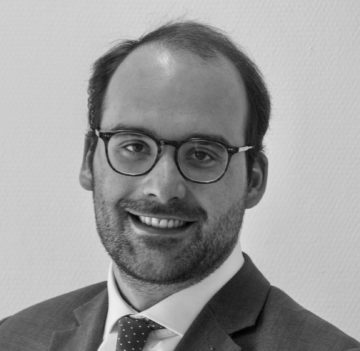
About the author: Glenn Janssens is a lawyer specialising in Spanish real estate transactions and tax regulations. Since 2017, he has been helping Belgian and Dutch individuals and entrepreneurs to safely purchase and structure real estate in Spain. He guides files from A to Z: from due diligence, ownership and tax control to estate planning and optimisation for residents and non-residents. Thanks to his years of experience, hundreds of handled files and focus on transparent communication, Glenn makes complex Spanish legislation understandable and practically applicable for every property buyer.