Is it compulsory to open a Spanish bank account to buy property in Spain? The short answer is no. For non-residents, opening an account with a major Spanish bank is often expensive, bureaucratic and unnecessary. Thanks to European SEPA regulations and the intervention of specialised law firms, you can perfectly manage both the purchase price and your fixed expenses from your Belgian or Dutch bank account.
Is a Spanish bank account legally required for the purchase?
No, Spanish law does not require foreign buyers (non-residents) to have a local bank account to purchase property.
In the past, this was the standard procedure, but the financial market has evolved. The purchase of a property, including payment via bank cheque or direct transfer, can be done entirely through our third-party account.
Why we advise against a Spanish major bank: The cost trap
Holding an account at a traditional Spanish bank (such as CaixaBank, BBVA or Sabadell) as a non-resident involves significant and often unexpected costs.
-
High management costs (Comisiones de mantenimiento): Spanish banks charge aggressive rates to non-residents. Without a salary deposit (nómina) these costs amount to €160 - €240 per year just for 'having' the bill.
-
The infamous 'Bank cheque' charges: At the notary, payment is often made with a Cheque Bancario. If you have it issued by your own Spanish bank, they often charge 0.4% to 1% of the amount. On a €300,000 purchase, that's €1,200 to €3,000 in pure bank charges.
-
Physical presence: For many administrative operations (such as unblocking an account), Spanish banks still require you to physically come to the branch.
How do I pay for my property without a Spanish bill?
You can pay the purchase price safely and efficiently without becoming a client of a Spanish bank yourself. The most common and secure method is through your legal representative.
-
Third-party account: You deposit the funds (including purchase price, taxes and notary fees) into the trust account of your supervising law firm (such as Confianz).
-
Bank cheque via Advocate: The law firm takes care of issuing the required bank cheques in the name of the seller. Because law firms run large volumes, their bank charges for these cheques are often considerably lower than what you would pay as an individual.
How do I pay for electricity and water (Domiciliations)?
A common misunderstanding is that utility companies (Iberdrola, Endesa, water companies) only accept Spanish IBAN numbers. This is legally incorrect.
According to the European SEPA regulation (EU 260/2012) there is "IBAN discrimination" if an EU company refuses to execute a direct debit to an account from another SEPA country (such as Belgium or the Netherlands).
-
Practice: Most major utility companies nowadays accept foreign IBANs for direct debits without any problem.
-
SUMA / IBI (municipal tax): Local authorities in tourist regions (such as Costa Blanca or Costa del Sol) are now also set to accept foreign accounts.
Note: Should you still encounter resistance from a small local provider, a free online 'neo-bank' with a Spanish IBAN (if required) is a much cheaper alternative than a traditional major bank.
Stringent anti-money laundering (AML) laws remain in place
Whether you open a Spanish bank account or not, you will not escape strict anti-money laundering controls (Prevención de Blanqueo de Capitales).
The Spanish government and the seller's bank (or your lawyer) must provide the source of funds verify. If you do not open your own Spanish account, your lawyer will perform this verification before accepting your money into the third-party account.
Make sure you have the following documents available digitally:
-
Personal income tax for the last two years.
-
Proof of savings (account statements last 6 months).
-
In case of financing through company: balance sheet and profit and loss account.
-
In case of donation or inheritance: the registered notarial deed.
Conclusion: opt for convenience and savings
Opening a Spanish bank account is for most second-stayers a outdated advice. It leads to unnecessary annual fees and expensive bank cheques.
Our advice is clear:
-
Use your Belgian/Dutch account for everyday use (SEPA).
-
Run the major transaction (the purchase) through your specialist lawyer's third-party account.
-
Avoid physical appointments at bank branches in Spain.
Frequently asked questions (FAQ)
1. Is it compulsory to have a Spanish bank account for a house in Spain? No, this is not compulsory for non-residents. You can pay the purchase via your lawyer's third-party account and pay fixed charges via SEPA direct debit from your Belgian or Dutch account.
2. Do Spanish utility companies accept a Belgian IBAN number? Yes, based on European SEPA legislation (Regulation 260/2012), Spanish companies are obliged to accept IBAN numbers from other EU countries. Refusal to do so is known as IBAN discrimination.
3. What does a Spanish bank cheque cost if I do open an account? Spanish major banks often charge between 0.4% and 1% of the value of the cheque. On a €300,000 property, this means an extra cost of €1,200 to €3,000, on top of the annual account management fee.
4. How do I prove the origin of my money without a Spanish bank? In this case, the anti-money laundering check shifts to your legal advisor or the notary. You should submit the same supporting documents (tax returns, bank statements, proof of sale of other property) to them prior to the transaction.
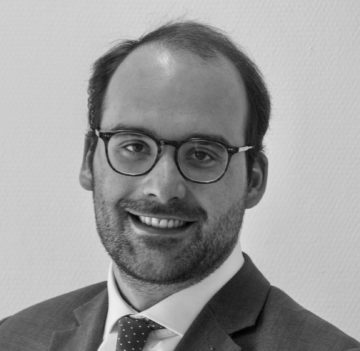
About the author: Glenn Janssens is a lawyer specialising in Spanish real estate transactions and tax regulations. Since 2017, he has been helping Belgian and Dutch individuals and entrepreneurs to safely purchase and structure real estate in Spain. He guides files from A to Z: from due diligence, ownership and tax control to estate planning and optimisation for residents and non-residents. Thanks to his years of experience, hundreds of handled files and focus on transparent communication, Glenn makes complex Spanish legislation understandable and practically applicable for every property buyer.
Read more about the practicalities of buying a property in Spain.